
CASE STUDY · OBSERVATION IN PRACTICE
When Desperation Walks
Into the Room
The Hidden Leadership Risk No One Talks About
In high-stakes business environments, leaders are often evaluated on strategy, execution, and results. Far less attention is paid to something that can undermine all three in a matter of minutes: emotional regulation.
EMOTIONAL REGULATION
DECISION QUALITY
LEADERSHIP BEHAVIOR
ORGANIZATION RISK
THE OBSERVATION
A meeting I observed early in my career provided a powerful lesson.
One meeting I observed early in my career provided a powerful lesson on how a leader's emotional state can influence leadership behaviors, decision-making, organizational credibility, and enterprise risk.
What began as a routine business discussion became an unexpected window into what happens when emotional regulation breaks down — in public, at the highest level, with the most to lose.
THE SITUATION
The room and the stakes.
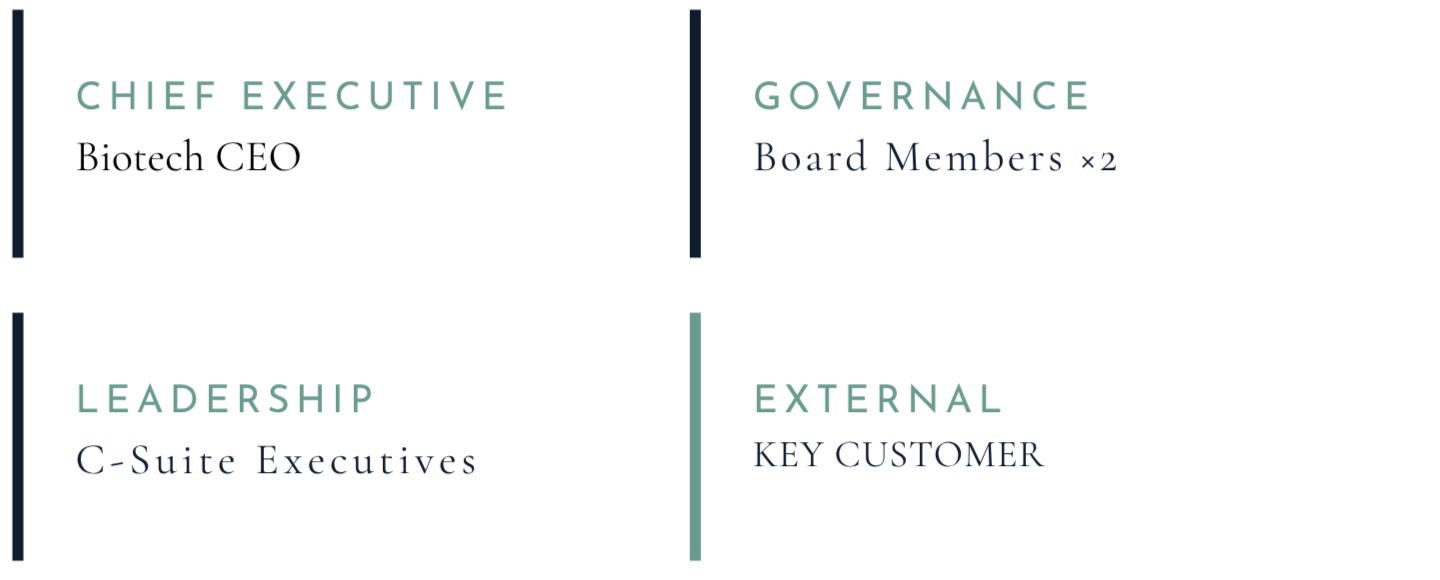
The meeting included a significant cross-section of leadership, board representation, and an external customer — the kind of room where perception shapes everything.
The CEO had been brought into the organization with a clear mandate: position the company for acquisition and successfully sell the business. However, the process was not progressing as expected.
Potential buyers were not engaging at the level anticipated, and the company was struggling to generate the interest leadership believed it deserved.
MEETING PARTICIPANTS

Better leadership starts with better internal awareness.
THE MOMENT
What happened next, defined everything.
“Why do you think we aren’t being more actively pursued by potential buyers?”
THE CEO — LEANING FORWARD ACROSS THE CONFERENCE ROOM TABLE TOWARD THE EXTERNAL CUSTOMER
The customer responded thoughtfully.
The CEO asked again.
And again.
Each time, his tone became more intense.
More frustrated. More emotional. More urgent.
What started as curiosity evolved into visible appearance of desperation.
THE EMOTIONAL ESCALATION IN REAL TIME
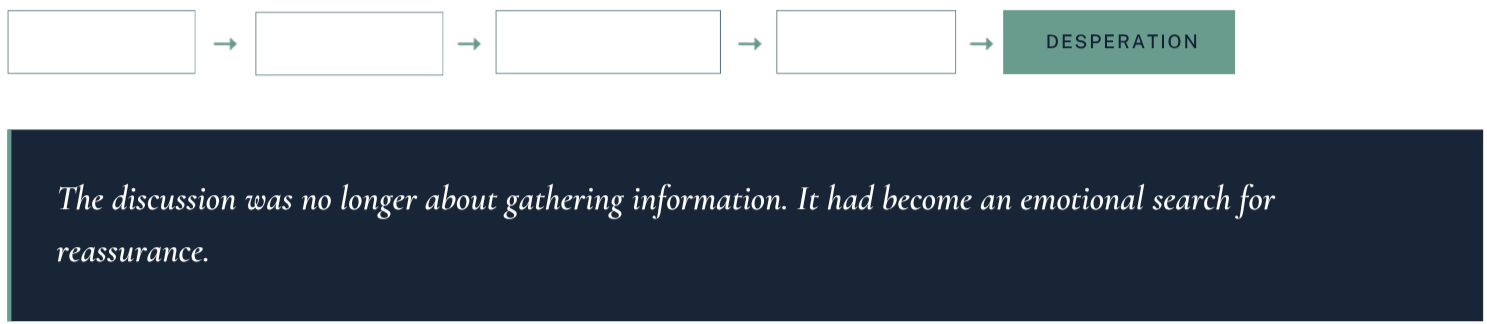
Those associated with the company appeared used to this behavior — acting as if this was business as usual.
The customer became increasingly cautious with his responses.
As an outside observer — with nothing to gain or lose — I became uncomfortable.
Very uncomfortable.
WHAT I WAS OBSERVING
As a neutral observer, what I was actually watching was something different from what the CEO likely believed was happening.
The CEO likely believed he was seeking valuable market intelligence.
In real time, the visible signals were not those of a leader gathering strategic information — they were signals of a leader, being led by his emotions.
Whether fair or not, leaders are continuously transmitting information through verbal and non-verbal cues.
In moments of stress, that transmission becomes even louder.
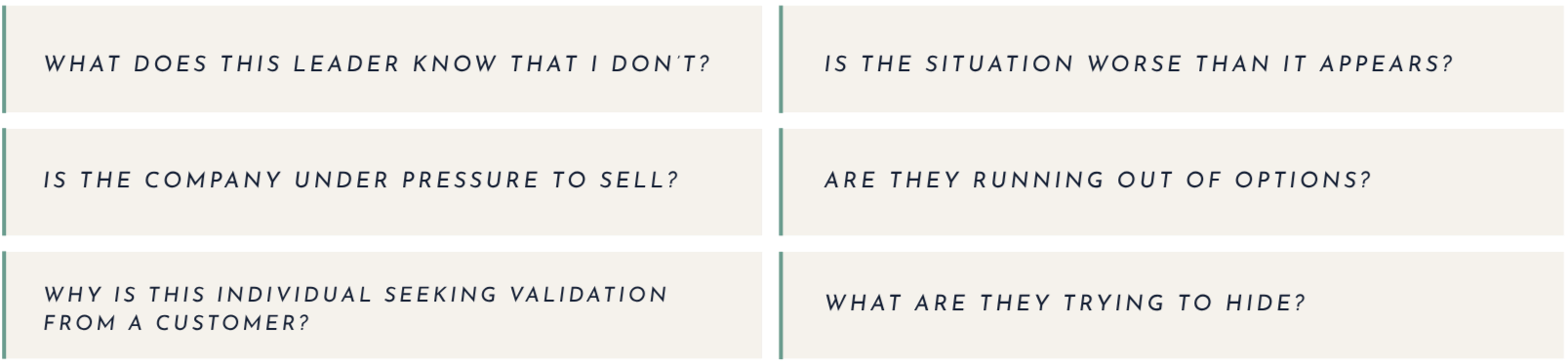
SIGNAL VISIBLE IN THE ROOM

Without saying a word, emotional leakage communicates uncertainty, instability — undermining perceived value and future negotiations.
QUESTION EXTERNAL STAKEHOLDERS MAY BE SILENTLY ASKING THEMSELVES WHEN WITNESSING THIS…
THE NEUROSCIENCE
What was happening inside the brain.
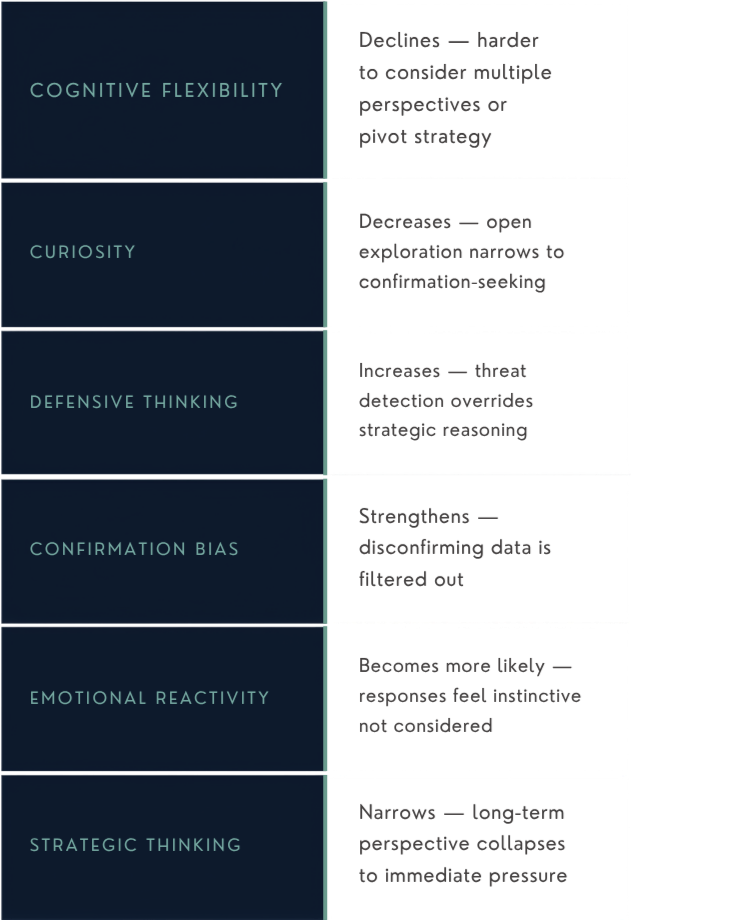
Under significant pressure, the brain's threat-detection systems may become more active.
Research demonstrates that chronic stress can impair activity within the prefrontal cortex — the area of the brain responsible for executive functions such as judgment, impulse control, planning, and decision-making.
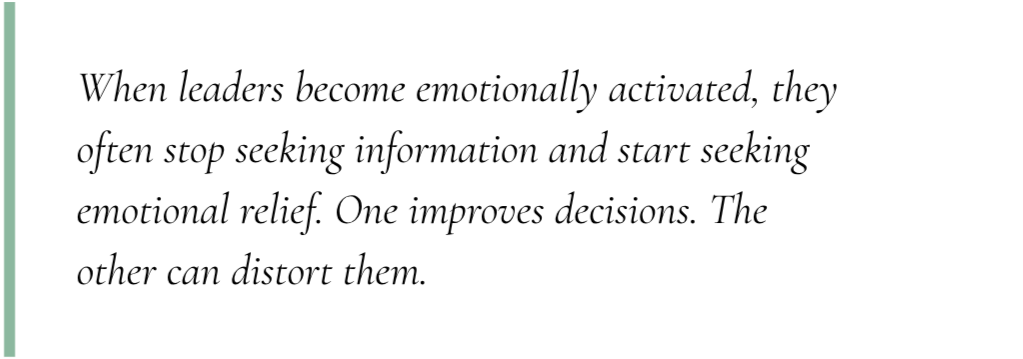
AS STRESS INCREASES
THE IMPACT ON NEGOTIATION
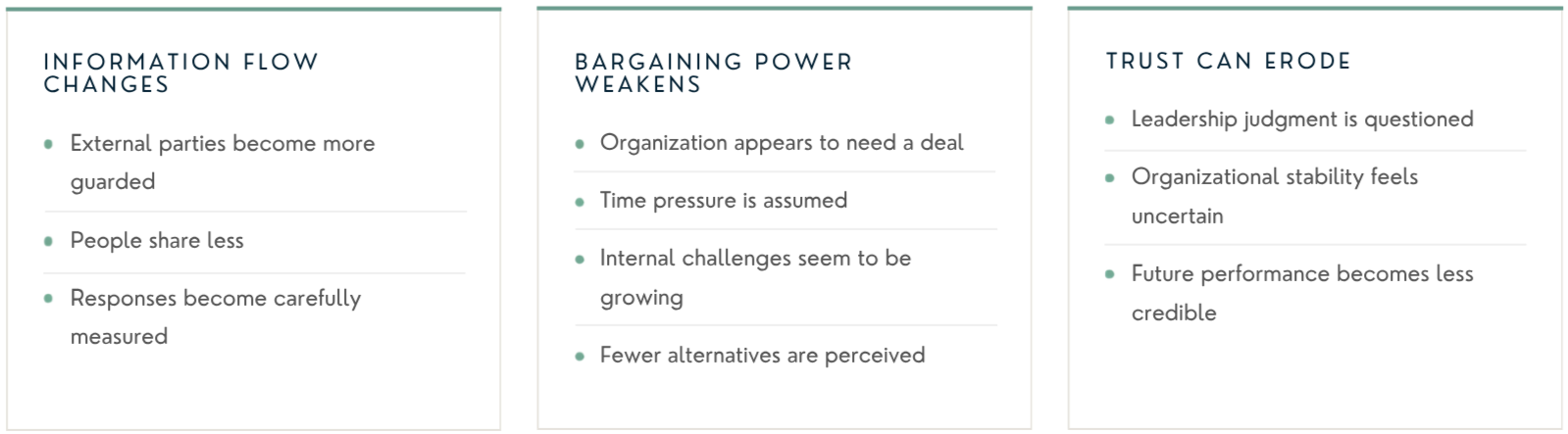
In negotiation, perceived leverage matters.
Desperation is often interpreted as a signal of reduced leverage.
When a leader appears desperate, external parties begin recalibrating their position based on what they are observing, not what they are being told.

THE IMPACT ON DECISION-MAKING
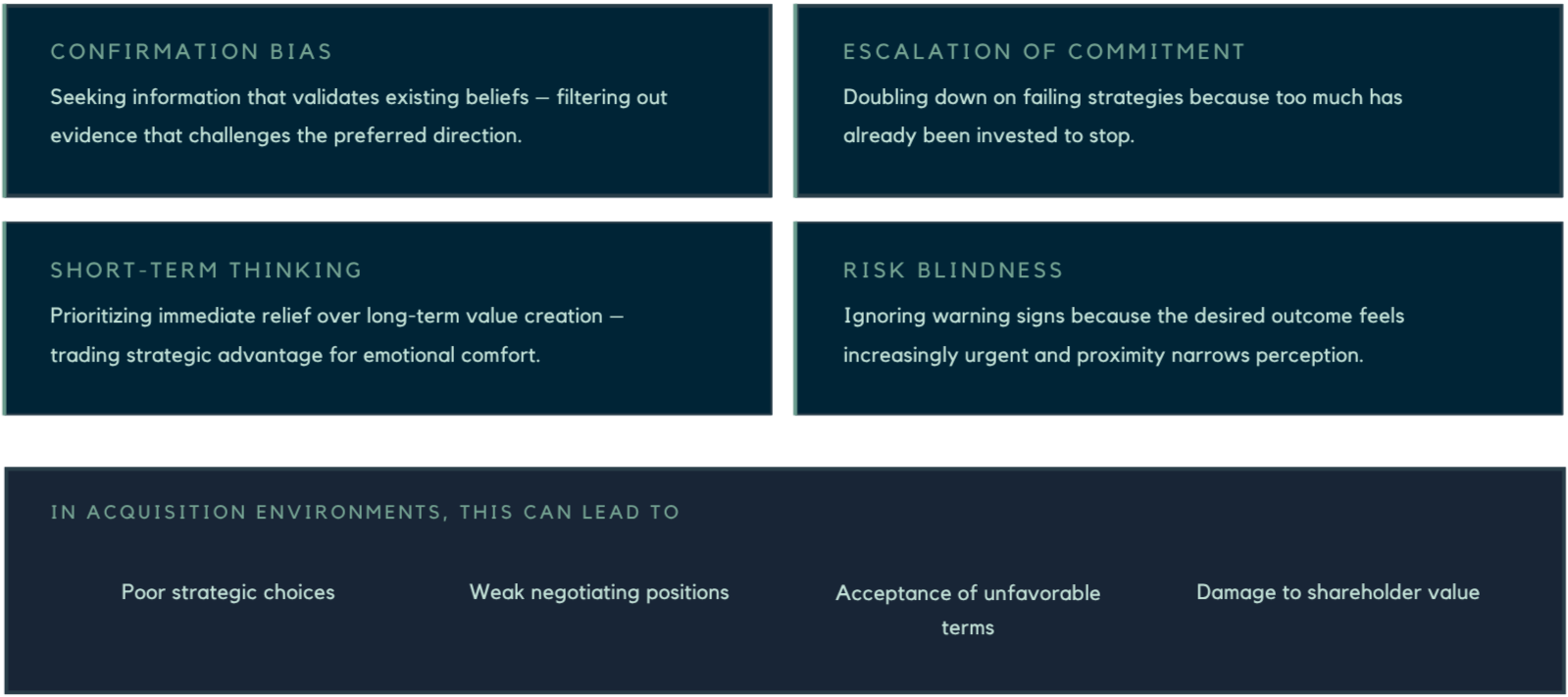
One of the most dangerous consequences of desperation is what it does to executive decision quality.
Leaders under emotional pressure become more vulnerable to a predictable set of cognitive distortions — each one quietly degrading the quality of strategic choices.
THE ORGANIZATION RIPPLE EFFECT
Senior leaders rarely realize how closely they are being observed.
Every visible emotional reaction becomes data for employees.
The emotional state of leaders often becomes the emotional climate of organizations — transmitted silently but felt widely.
When leaders project desperation, the organization reads it. Not through formal communication. Through behavior, tone, body language, and the spaces between words.
WHAT EMPLOYEES MAY CONCLUDE
The company is struggling
Leadership lacks confidence
The future is uncertain
Hidden problems exist
THIS PERCEPTION CAN TRIGGER
Reduced engagement
Increased turnover risk
Internal rumor cycles
Lower confidence in leadership
THE REAL LEADERSHIP LESSON
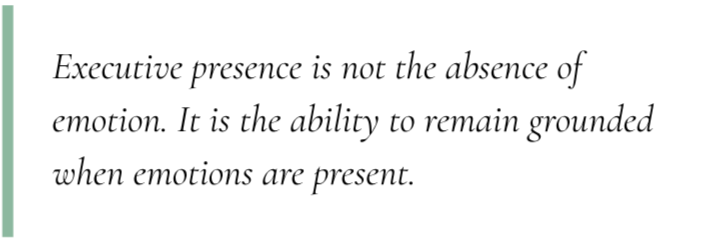
The lesson was not that leaders should suppress emotions.
It is that they must learn to regulate them.
Authenticity matters. Passion matters. Concern matters. What matters even more is emotional regulation.
The highest-performing leaders are not those who never experience frustration, anxiety, or uncertainty.
They are the leaders who can experience those emotions without allowing them to drive behavior.
REFLECTION QUESTIONS FOR LEADERS
When facing uncertainty, ask yourself:
01 Am I seeking information or reassurance?
02 What emotions am I communicating without realizing it?
03. How might external stakeholders interpret my behavior?
04. Is my emotional state expanding or narrowing my thinking?
05. What signals am I sending to my team?
The answers often reveal risks that strategy decks and financial models never will.
KEY TAKEAWAY
Organizations invest heavily in strategy, operations, and financial planning.
Yet many of the most consequential business outcomes are shaped by something far more fundamental.
A leader's ability to regulate their emotions under pressure.
In moments of uncertainty, stakeholders are not just evaluating the business. They are evaluating the behavior of the people leading it. And sometimes, the most important message in the room is the one that was never intended to be sent.